10 Mistakes Beginner Surfers Make (Especially Adults!)
You’ve probably heard people say, “Surfing is the hardest sport to learn, especially as an adult.” If you’re here, that didn’t scare you away—and it shouldn’t! While surfing is definitely challenging, learning to surf as an adult can be incredibly fun if you have the right attitude and avoid the common mistakes that make progress frustrating.
I started surfing in my late 20s, about five years ago, which gives me just enough experience to help newbies while still remembering the struggles. I’ve taught a handful of friends to surf and gotten them riding waves in their first sessions. These are the top 10 mistakes I see beginner surfers make, most of which I made myself!
Common Surfing Mistakes: Prep
1. Not checking the surf report before you go.
When I first started learning to surf as an adult, I’d just go after work and wonder why some days were amazing and others were miserable. Turns out, tide, wind, and swell all matter… a lot! Learning to read surf reports can feel tricky because there’s no universal “perfect” condition. Spend time figuring out what works for your local break and plan sessions around favorable conditions.
2. Paddling out right away.
Spend time looking at the waves and getting a lay of the land (ocean) before you dive right in. You can do this even on days when you’re not getting in the water just to practice reading the waves. Even if you’ve been to the spot dozens of times, the ocean changes every day (which is again why its crucial to check the surf report!). See where the waves are breaking, where they’re staying open, and plan out where you want to position yourself in the water. Once you’re in the ocean, it’s way more difficult to get your bearings!
Mindset Tip: Beyond the physical aspect of surfing, you need to learn to understand the language of the ocean. Invest some time learning your breaks, watching the ocean, and the ROI will be more fun in the water!
Common Beginner Surfing Mistakes: Paddling
3. Not using your lats.
Most beginner surfers think of paddling is all arms, but your back muscles should actually do the heavy lifting. Think about doing a lat pull-down at the gym, but the water is your bar. Your lats are a much bigger muscle group than your arms so if you engage your back properly you’ll be able to paddle longer without getting tired. Having proper paddle form also helps to prevent shoulder injury, just remember to warm up!
4. Not paddling deep enough.
To get the most out of each stroke, get elbow deep in the water with each stroke. Beginner surfers often spread their arms wide away from the board, which limits depth. Keep your arms close to the board and dig deep!
5. Paddle Panic.
Knowing how to paddle is one thing, remembering it when adrenaline is another! So often I’ll see people going for a wave looking strong, but, in that crucial moment, right as they’re about to catch it, they panic and start flailing their arms around. When I was first learning I did this ALL THE TIME and I missed so many waves because of it. A friend of mine told me, “find your zen”, it’s still something I say to myself when I’m out in bigger swell. When you feel that panic settling in, breathe deep, and try your best to stay calm and steady.
Mindset Tip: Mastering (3) and (4) is the key to overcoming (5). Commit proper form to muscle memory. Even on days you don’t catch a single wave, you’re still building strength and technique that will be your foundation in the future. Think of those days as conditioning days!
Common Beginner Surf Mistakes: Popping Up
6. Pop Up Panic.
The phrases, “you almost had it” and “two more paddles” are going to haunt you early in your surf career. Most beginner surfers pop up too early, usually as soon as they feel the wave lift their tail. The feeling is scary at first, but in reality you often need two more paddles after you feel that swell. Popping up too quickly can kill your momentum and cause you to miss the wave, even when you’re in the perfect position, and result in a lot of wasted energy.
7. Leaning Back When You Pop Up.
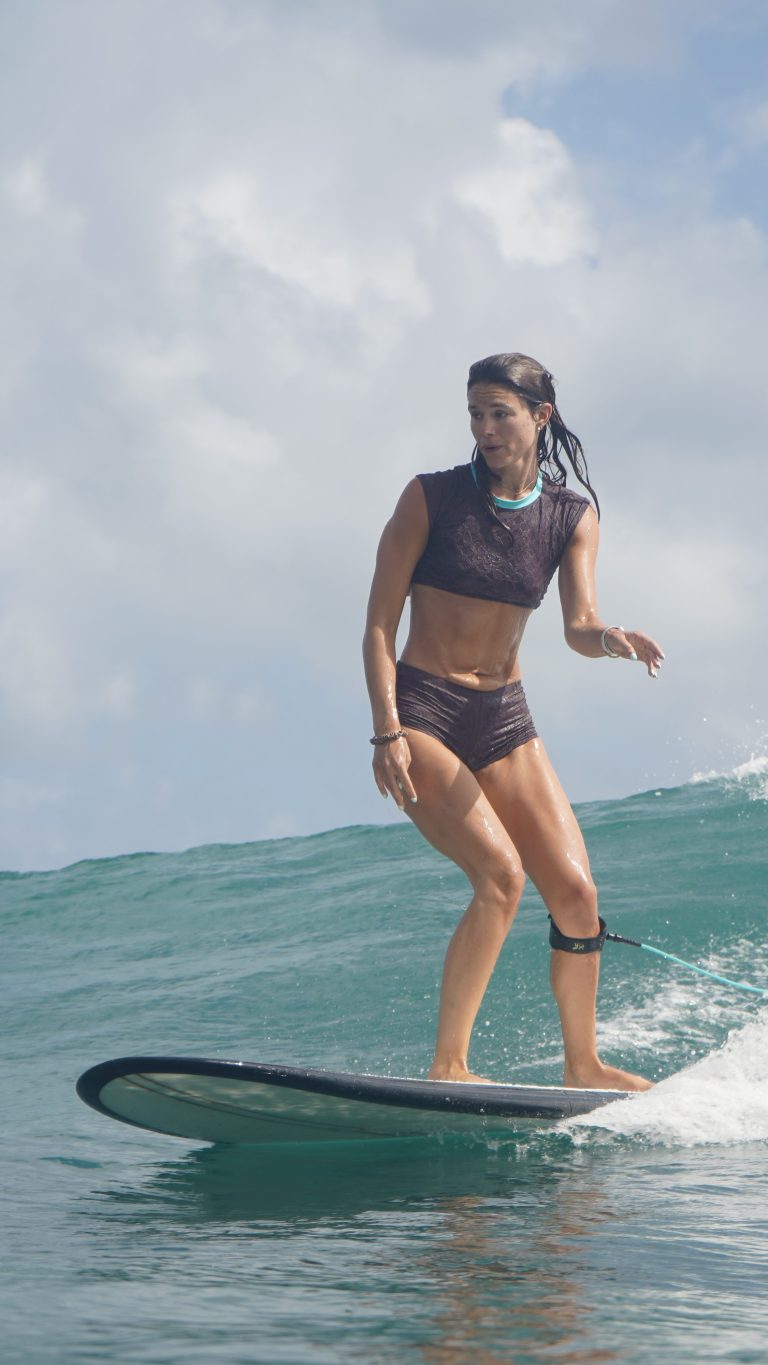
Think of the wave like a hill: you want to go down it, not roll off the back. Lean slightly forward, coming from your front shoulder, to help propel yourself down. If you find that you’re nosediving, you may be standing too far forward on your board. You want your feet towards the tail, but your weight in your front foot (at least while you’re trying to get in the wave).
8. Too much weight in the heels.
If you’re used to weight training or Pilates you may instinctively instinctively pop up in a squat with weight in your heels. In surfing, that sends you falling backwards off your board. I can’t tell you how many times I missed a perfect wave because I popped up with perfect form… for a Pilates class. Keep your knees bent casually, and your weight held centrally over your feet. You’ll play with this distribution when you start turning and trimming, but for now, think of finding your center both mentally and physically.
9. Too wide of a stance.
This is another form mistake that could be causing you to fall over. you want your feet hips with distance apart. A too-wide stance unevenly distributes weight on your board and makes you less stable. Also, the other surfers will make fun of you and call this a “shit stance” because well… it looks like you’re about to take a shit.
Mindset Tip: If you’re almost catching waves but not riding them, that’s progress! Timing is half the battle, small adjustments in your pop-up and stance will get you the rest of the way.
And last but not least … the Ego-Related Surfing Mistake
10. Downsizing your board too soon.
It’s so tempting to get a sexy short board as soon as you start to catch consistently, but this can set you back if you do it too soon! I saw a friend go down to a high performance mid-length from her foamie, and for months she was barely catching waves. There’s no shame in being the best surfer on a foamie – more waves = more fun = more progress, don’t rush yourself onto a shortboard.
Final Thoughts: Learning to surf as an adult is challenging but rewarding. Avoid these common mistakes, stay patient, and remember: every session builds strength, confidence, and muscle memory. Progress might feel slow at times, but every paddle counts.
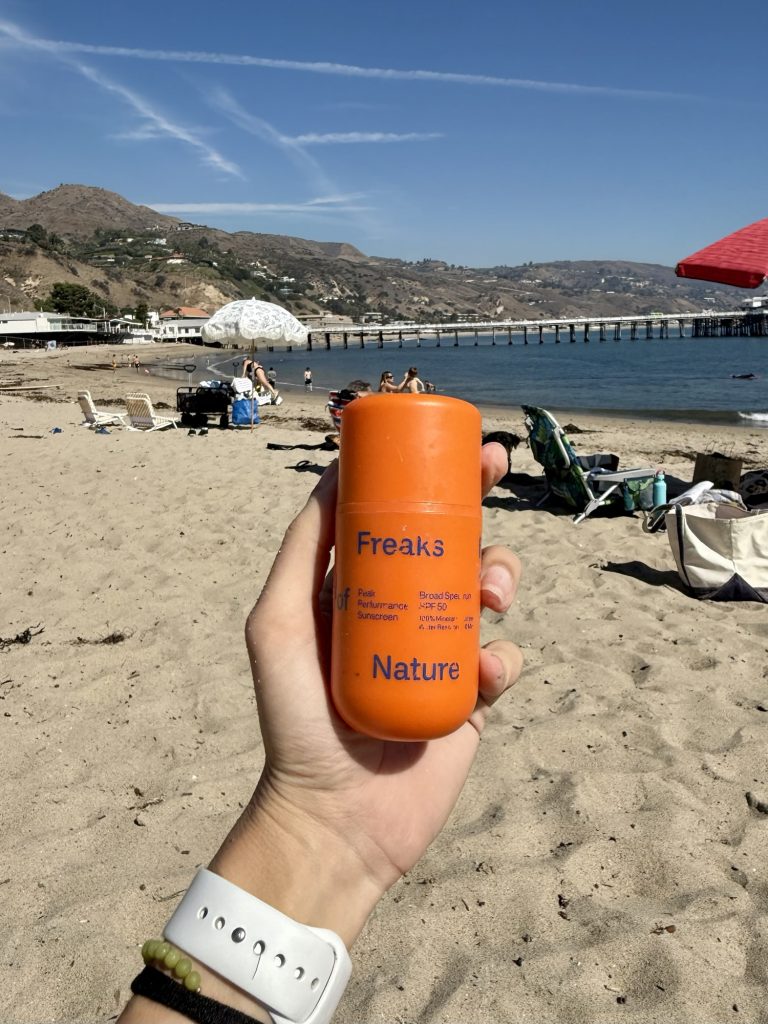
Need help getting your surf bag sorted? I have compiled collection of products that help me feel confident going into the water and comfy coming out. See what’s in my surf bag.


 English